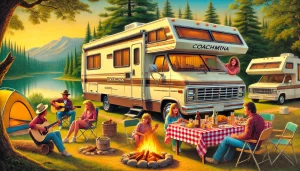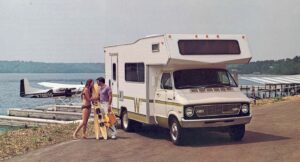
In 1966, Winnebago Industries introduced a significant innovation to the recreational vehicle (RV) market with the launch of their first motorhome model, known as the F17. This model played a pivotal role in making RV travel more accessible and comfortable for a wider audience, thereby marking the beginning of a new era in road travel. The F17’s introduction was indeed a milestone that helped establish Winnebago as a leading name in the RV industry.
Historical Context of the 1960s
The 1960s in the United States were characterized by significant economic growth and social transformation. The expansion of the middle class and the rising popularity of road trips created an ideal market for recreational vehicles. Founded in 1958 in Forest City, Iowa, by John K. Hanson, Winnebago Industries was well-positioned to tap into this emerging market with affordable, high-quality motorhomes.
The Launch of the F17
Prior to the F17, motorhomes were typically custom-built and priced out of reach for the average family. The F17 changed this dynamic by being the first mass-produced motorhome, which combined affordability with quality features. It was built on a Ford chassis and powered by a robust 300-cubic inch V8 engine, making it suitable for long-distance travel.
The F17 included essential amenities for comfortable living on the road, such as a kitchen equipped with a refrigerator and stove, a bathroom with a toilet and shower, and sleeping accommodations for up to six people. These features made it an ideal choice for families eager to explore the country.
Innovative Design and Features
One of the standout features of the F17 was its innovative Thermo-Panel® construction, a method that involved the high-pressure bonding of an exterior skin, a core of rigid foam insulation, and interior paneling. This technique not only provided exceptional strength and insulation but also set the F17 apart from other RVs of its time.
Inside, the F17 boasted a practical and comfortable layout, including a spacious living area and a fully equipped kitchen. High-quality materials and thoughtful design details ensured that the F17 was not just functional but stylish, offering the comforts of home while on the move.
Impact on the RV Industry
The introduction of the Winnebago F17 had a profound impact on the RV industry. By making motorhomes more affordable, Winnebago significantly broadened the market, allowing more families to embrace the RV lifestyle. The success of the F17 solidified Winnebago‘s position as an industry leader, a status it maintains to this day.
Frequently Asked Questions
- What was the first Winnebago motorhome? The first Winnebago motorhome was the F17, introduced in 1966.
- What innovative construction method did the Winnebago F17 use? The F17 used Winnebago’s Thermo-Panel® construction, which provided superior insulation and durability.
- What features did the Winnebago F17 include? The F17 included a kitchen with a refrigerator and stove, a bathroom with a toilet and shower, and sleeping accommodations for up to six people.
- What impact did the Winnebago F17 have on the RV industry? The F17 made motorhomes more affordable, opening up the market to a wider audience and establishing Winnebago as a leader in the industry.
- Who founded Winnebago Industries? Winnebago Industries was founded by John K. Hanson in 1958 in Forest City, Iowa.
As Winnebago continues to innovate and lead in the RV industry, the legacy of the F17 remains a testament to the company’s enduring impact on making road travel accessible to all.
Sources Cited:
- Winnebago Industries. Winnebago Milestones: Pioneering for 65 Years! More info on Winnebago
- Family RVing Magazine. The First 50 Years of Winnebago. More info on Family RVing
- Visual.ly. The History of Winnebago. More info on Visual.ly